

Fiordland Gems
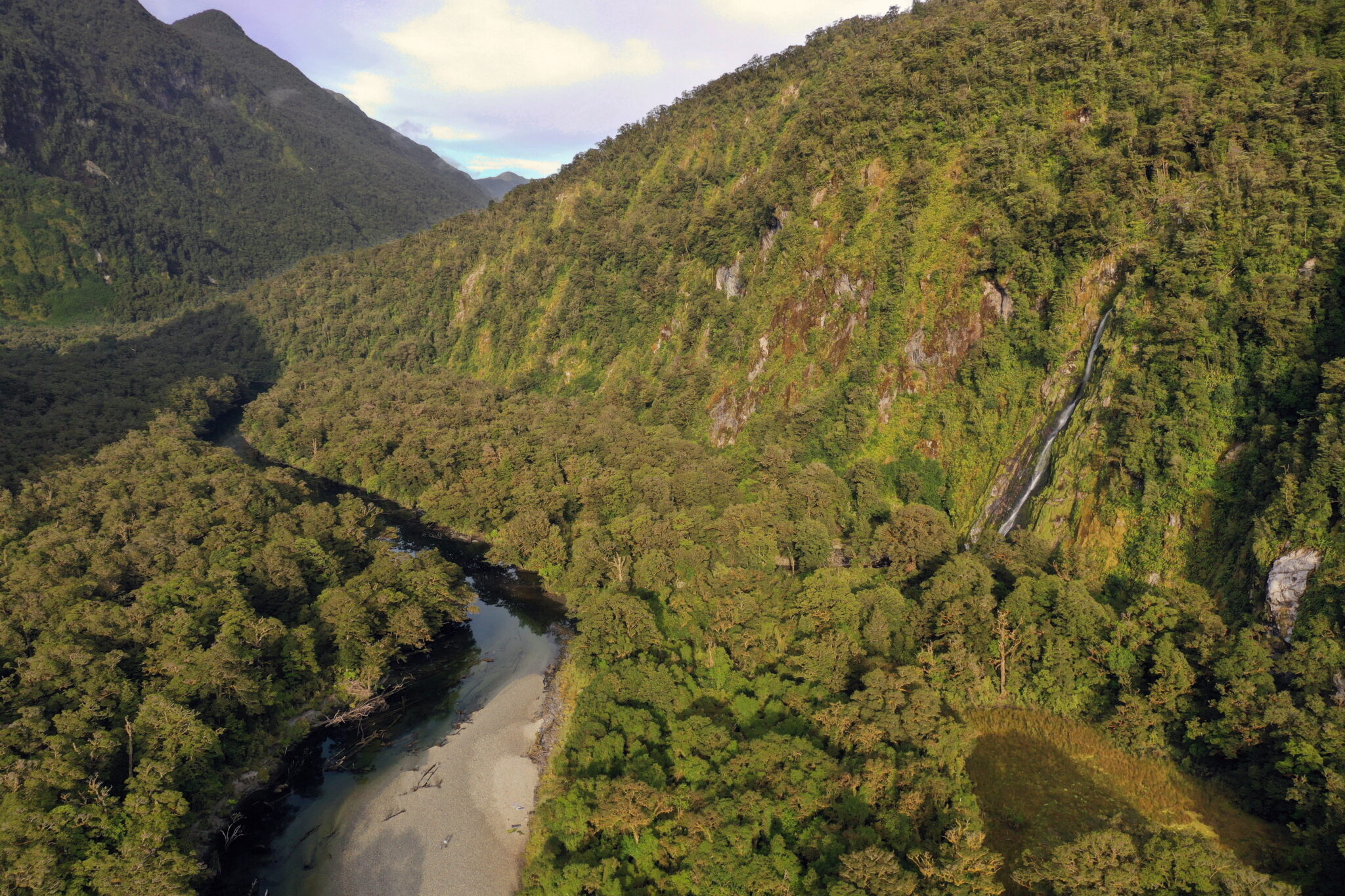
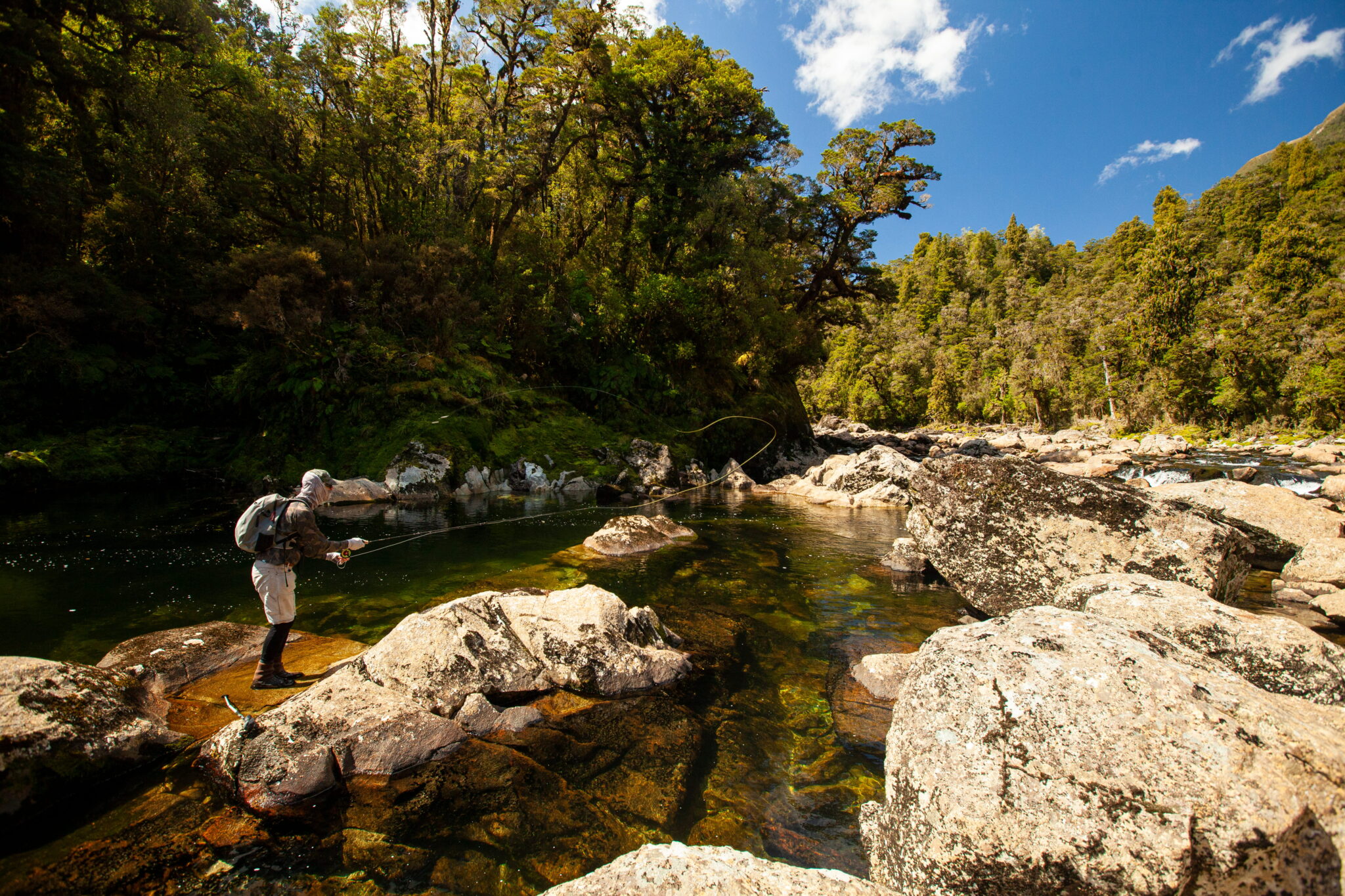
Located in the South-western corner of New Zealand’s South Island, Fiordland is home to some of the country’s most wild and dramatic scenery. Fiordland is one of the largest National Parks in the world and a World Heritage area. The area is testament to the power of nature, here waterfalls tumble hundreds of yards into virgin forest and lonely fiords tower above the visitor. Many Moari legends pertain to the area’s formation, it is said that the warrior demi-god Tuterakiwhanoa carved the rugged landscape from formless rock with a gigantic sword. As one looks around at the steep valley walls crowned by pointed mountaintops, it is easy to imagine. Fiordland comprises an enormous area, covered in rivers and lakes, almost all of which hold trout.
River Structure
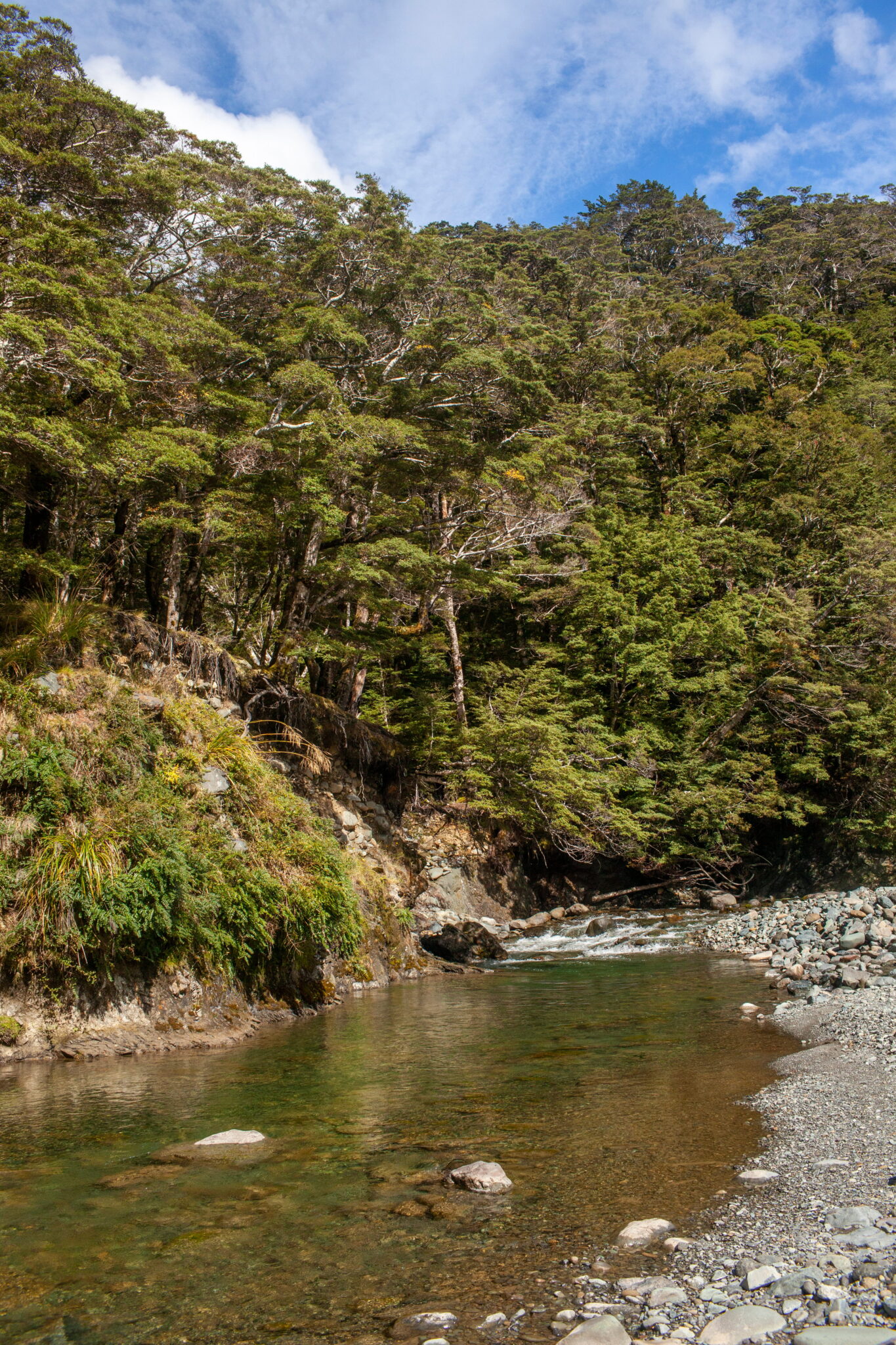
A large majority of the rivers in Fiordland can be classed as high gradient rivers. That is to say that they are generally short, powerful and drop a great deal in altitude over a relatively short distance. This is not surprising considering the steep and angular topography of Fiordland.
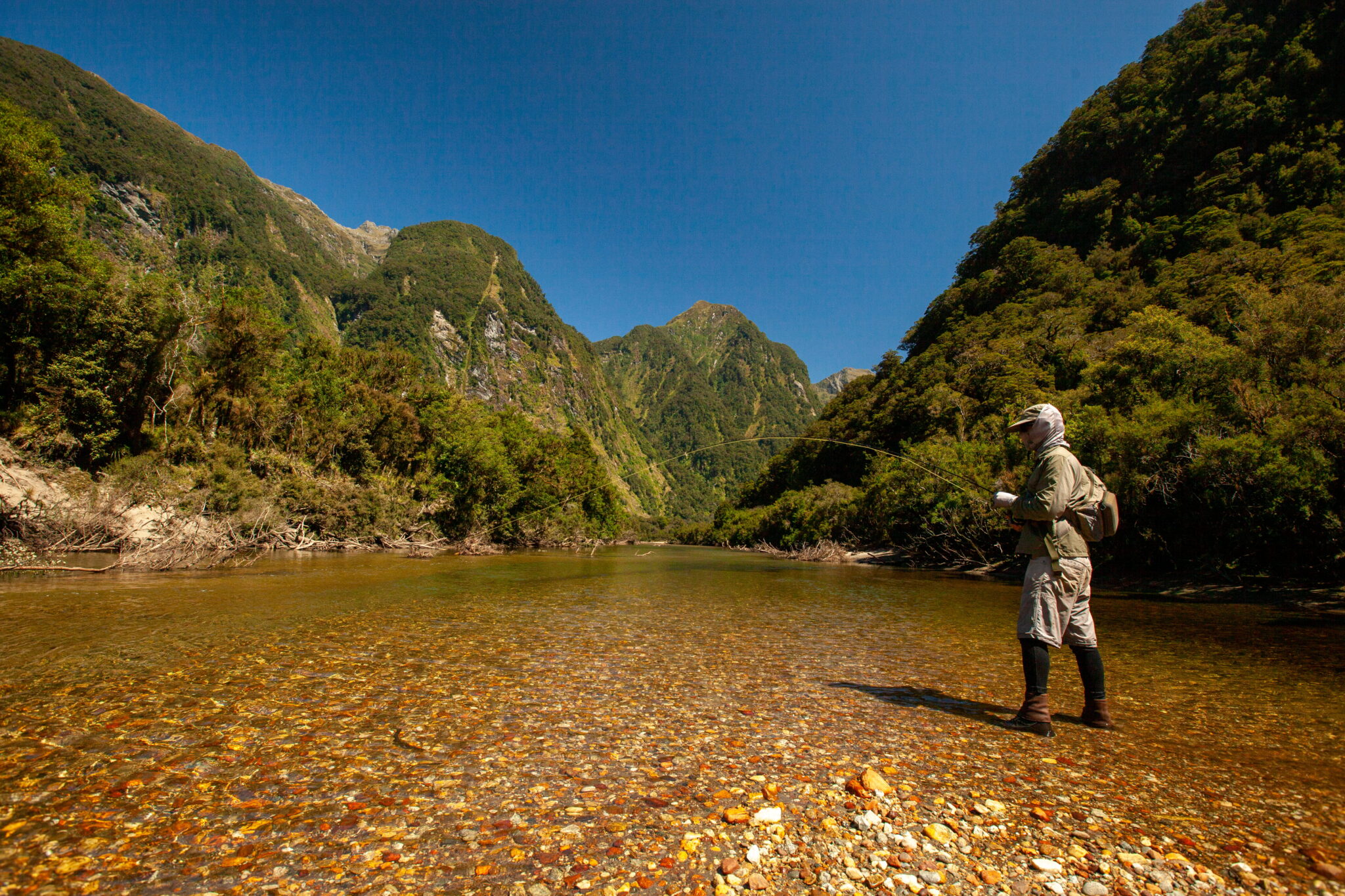
New Zealand rivers are famous for their clarity and the rivers in Fiordland are no exception. They come in a full kaleidoscope of colours from an enchanting emerald green to amber coloured and others bright aqua blue.
Fish
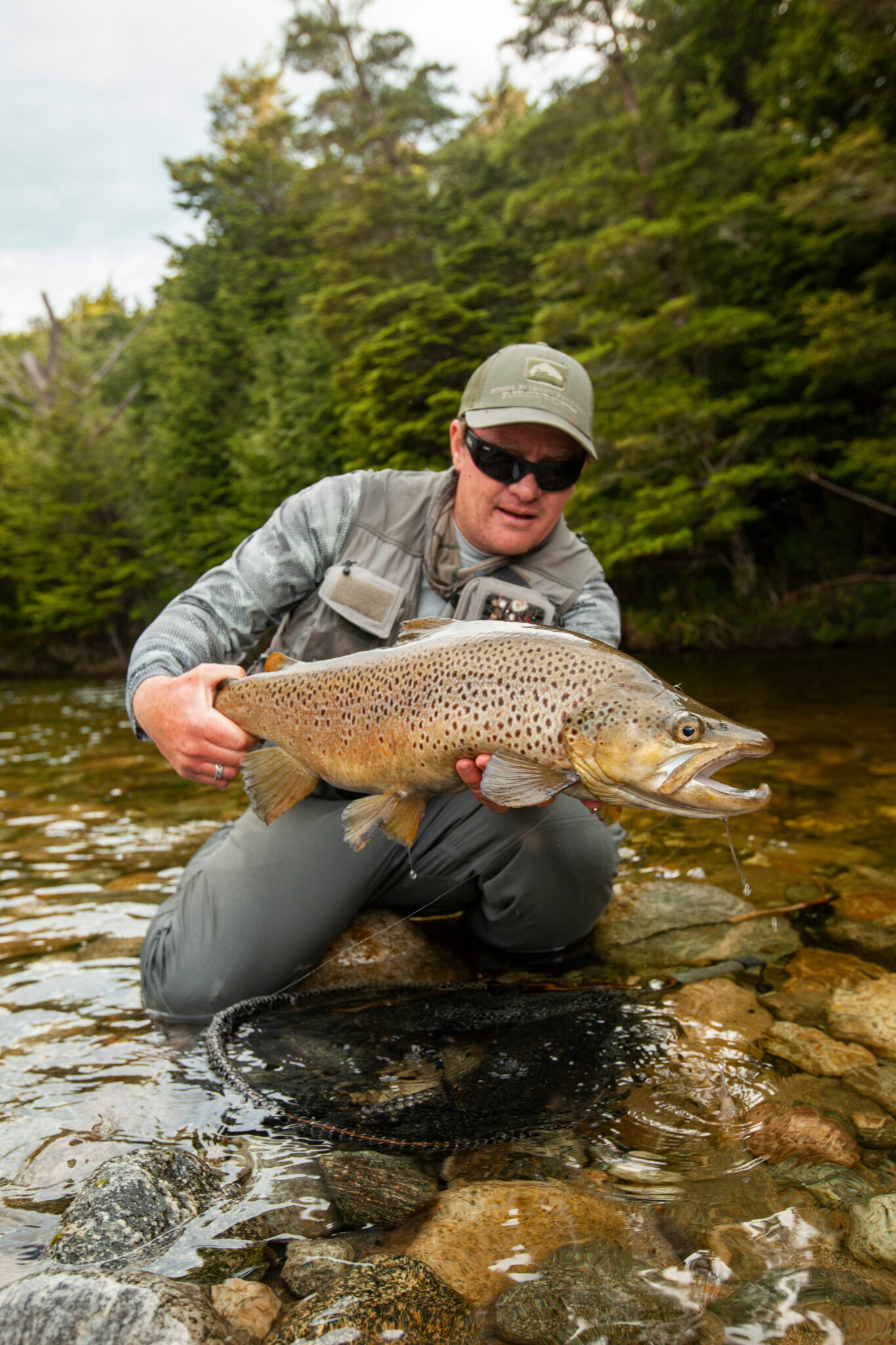
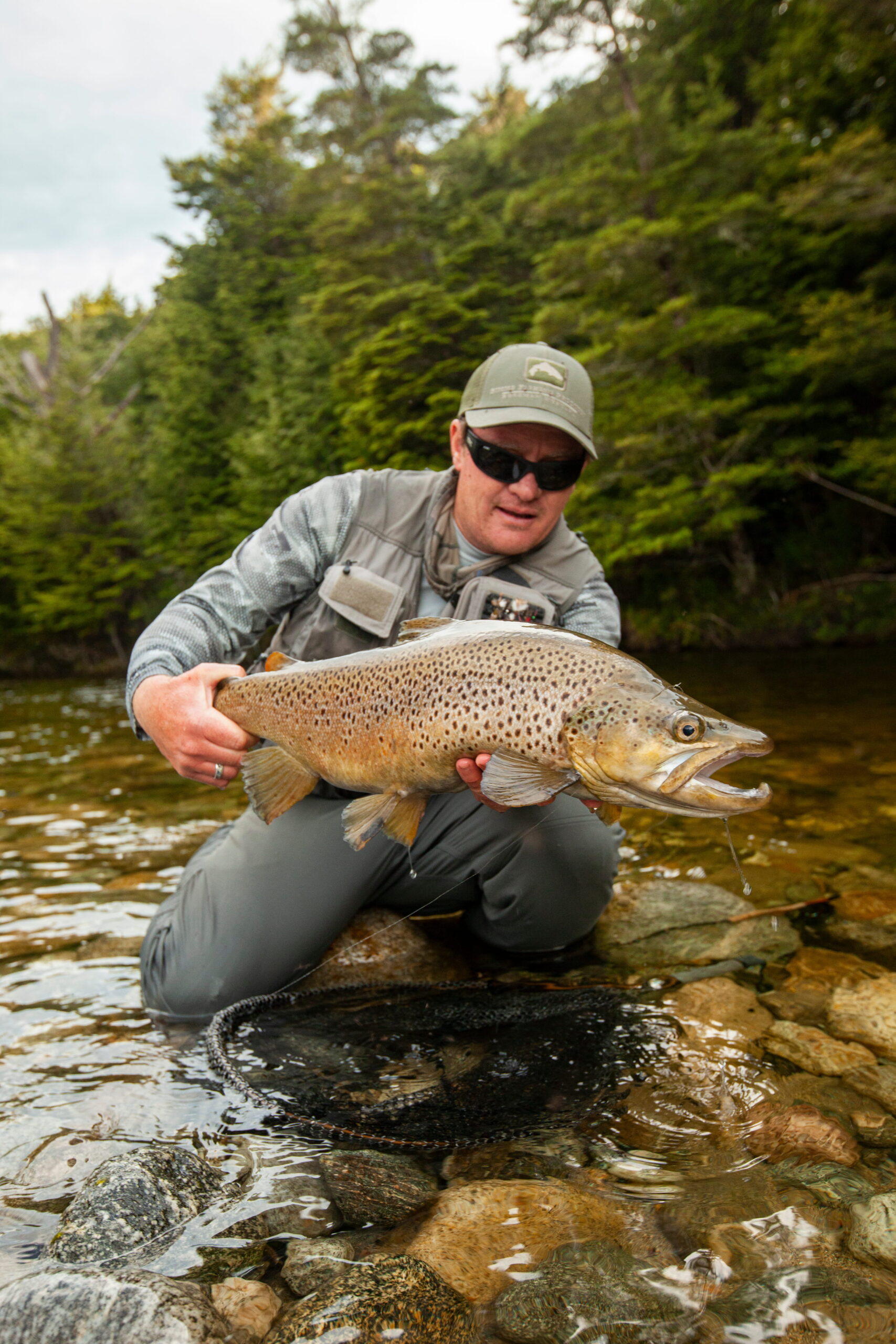
Both brown and rainbow trout are present in the rivers and lakes, although the brown trout predominate. Like the rest of New Zealand, these trout are big on average and can reach over 10lb in some systems. The large size of the fish and the crystal clear water mean that sight fishing is a successful and exciting method and the way our guide team prefer to fish. Anglers will walk upstream scanning the water until a target is sighted and then a plan will be made on how to present the fly.
As is typical of trout, the fish in these rivers have adapted their colouration in order to be better camouflaged in the water. Both the browns and rainbows can vary considerably in colouration between systems depending on the colour of the water. My favourite are brown trout from the amber rivers, they tend to be a radiant copper colour with large brown spots.
Dry or nymph
During the summer months the terrestrial insect populations become active and this signals the start of the dry fly season. Cicadas and blowflies are amongst the largest of these insects and figure highest on a trout’s menu. As both are winged they are prone to accidentally taking a dip in the river, where the trout are only too happy to gobble them up. These insects provide a great meal for the fish but are not a constant source of nourishment for them. All feeding on these terrestrial insects is opportunistic. The key to using dry flies on these rivers is to attract the attention of the fish, there is no need for delicate presentations here. Often the harder you slap the dry down the quicker you will get the attention of the trout.
The best patterns are general patterns that could be taken for either a blowfly or a cicada. In this regard the Blowfly Humpy reigns supreme especially the bottle green version, which has a cicada-like glint to it. Be warned the takes are sometimes agonisingly slow and it is pays to strike only once the fish has started to head back down to the bottom.
Mayfly nymphs and caddis grubs are present in good numbers in all rivers and they form the staple of the trout diet. Nymphs can be fished under a dry fly, truck and trailer style. This gives the fish a choice to either eat the dry or the nymph and lets the angler hedge their bets. Fishing a double nymph rig under an indicator is also a popular way to fish especially in deeper pools. The good old hare and copper is hard to go past as a general nymph pattern.
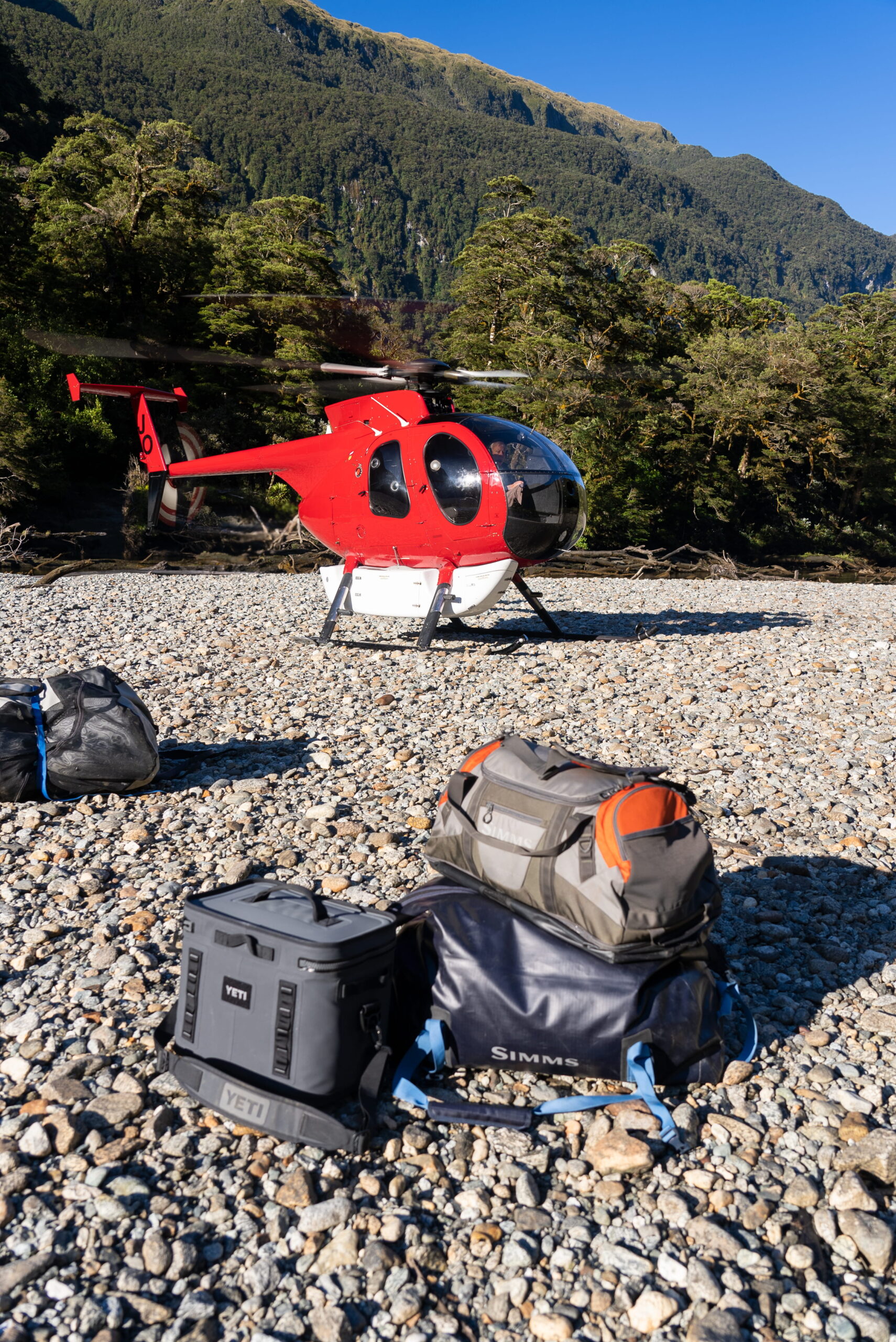
Heli Fishing
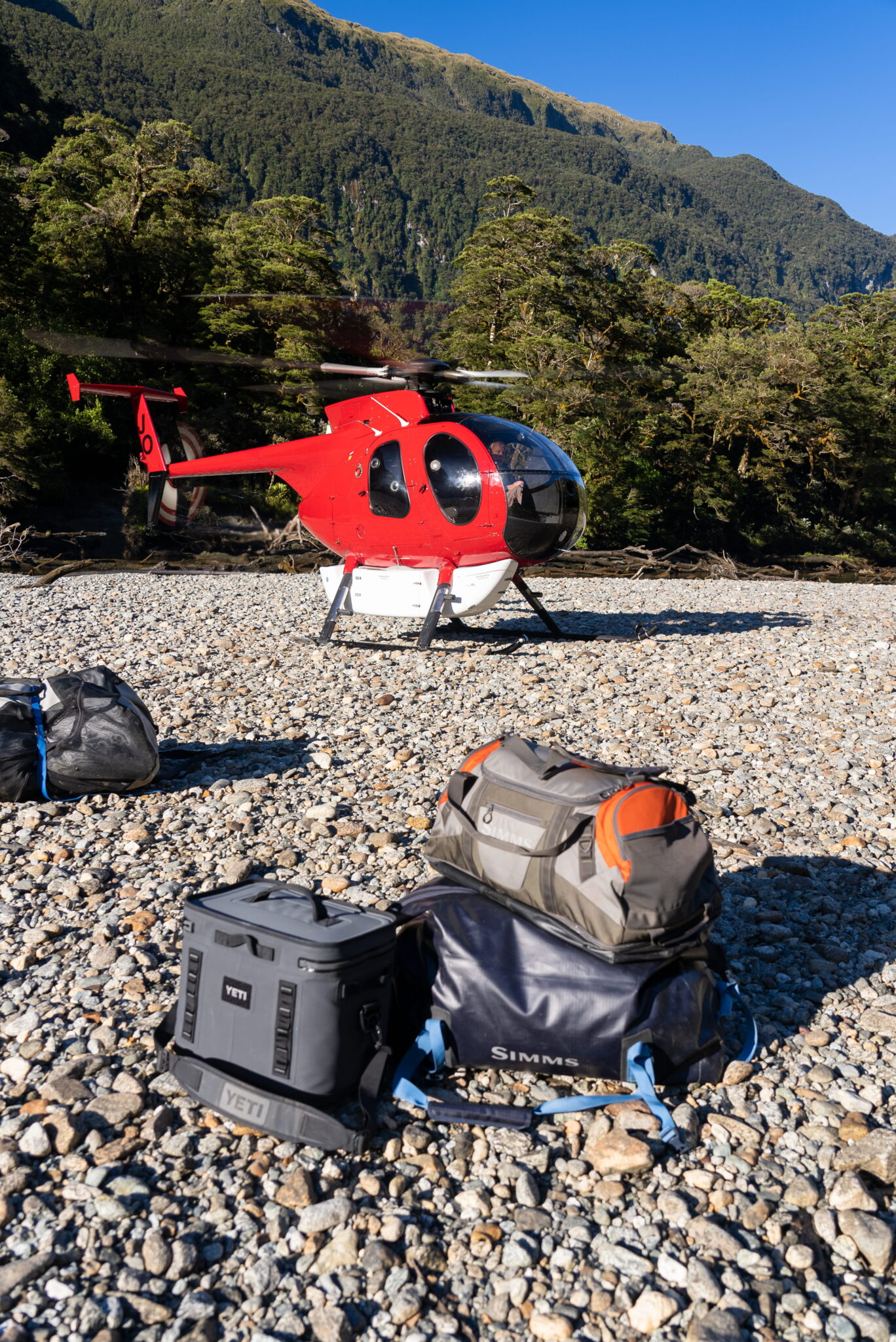
Fiordland is an enormous tract of land that is extremely hard to access. There are very few roads and most access is either by walking, boat or helicopter. Te Anau is a small town on the edge of the Fiordland National Park where we base our operation. In this tiny town of 3000 people, there are three helicopter companies which own least a dozen helicopters between them. That gives you an idea of how important they are for access here.
Our team of guides are all experienced in heli-fishing and know which rivers are best under the prevailing conditions. It is extremely rugged country and having someone looking out for your safety and managing your day is invaluable.
Tackle
A 5/6 weight rod will provide finesse as well as having enough strength to put pressure on a large fish. Reel choice is also important. The large trout that inhabit these waters are more than capable of long runs. A reel with plenty of backing and a smooth drag system will prove to be invaluable when connected to the trout of a lifetime. Considering the ultra light tippets that are sometimes needed to hook these fish, it pays to service the drag system of your reel so that it is silky smooth.
From a presentation point of view no leader can ever be too long, however the longer they get the harder they are to cast. Its is a constant balancing act but we tend to use as long a leader as possible in the prevailing conditions.
Adventure and Isolation
One glance at a topographic map of this area will reveal its potential and would have any keen fly fisher drooling over the almost limitless possibilities. There are a number of rivers here that have long established and fully deserved reputations for exquisite angling, such as the Eglington River, the Clinton River and the mighty Waiau River. But there many rivers of equal quality that have slipped under the radar and remain relatively untouched. Fiordland offers adventure and isolation in a world where both are at a premium.