
Words Aren’t Worth Much
Slogans and taglines are just words. Cleverly designed and meticulously crafted words, sure, but words won’t keep you dry or comfortable when you’re fishing. You judge fly fishing gear by its performance, not its branding. So, when Skwala Fly Fishing says their stuff is “Built to Fish,” what does that mean for you, and why should you listen?
“You shouldn’t,” says Skwala’s head of marketing, Rich Hohne. “You should never buy anything based on slogans, taglines, or slick advertising alone, especially high-end outdoor gear that you depend on.” That may sound hypocritical coming from a guy who has spent his whole career working in marketing for outdoor brands, but Rich explained it further.
“One of the main reasons I came onboard to help build Skwala is because we’re not trying to trick anyone. The gear is solid. All our gear is thoughtful. It’s all designed by people who understand fly fishing and made to perform in specific fly fishing situations. We don’t do gimmicks. We make essential gear better—more functional, more efficient, more comfortable, more durable. That’s what “Built to Fish” means, and it makes my job a lot easier.”
The Skwala Hatch Gets Thicker
Skwala launched in 2022, offering a different approach to essential fly fishing apparel like waders, jackets, and sunwear. “I’m a product guy at heart,” said founder and CEO Kevin Sloan. “I felt like the fly fishing space needed a kick in the butt, and I knew there were a lot of good people out there who also had some different ways of looking at products, especially in the textiles arena.”
In the past couple of years, they’ve slowly but steadily expanded their offerings, launching Thermo, a line of Merino insulation, and their version of a “guide” wader and jacket called the Backeddy Collection. But the big news for 2025 is that they’re coming out with two different styles of wading boots.
“We were planning to do footwear from the very beginning,” Sloan told us. “But we don’t launch anything unless it lives up to our expectations. It’s taken several years of work and redesign to get this right—to make boots that we think are vastly superior to anything else out there and will live up to the reputation we’ve built for Skwala gear.”
What Makes a Boot Skwala-Worthy?
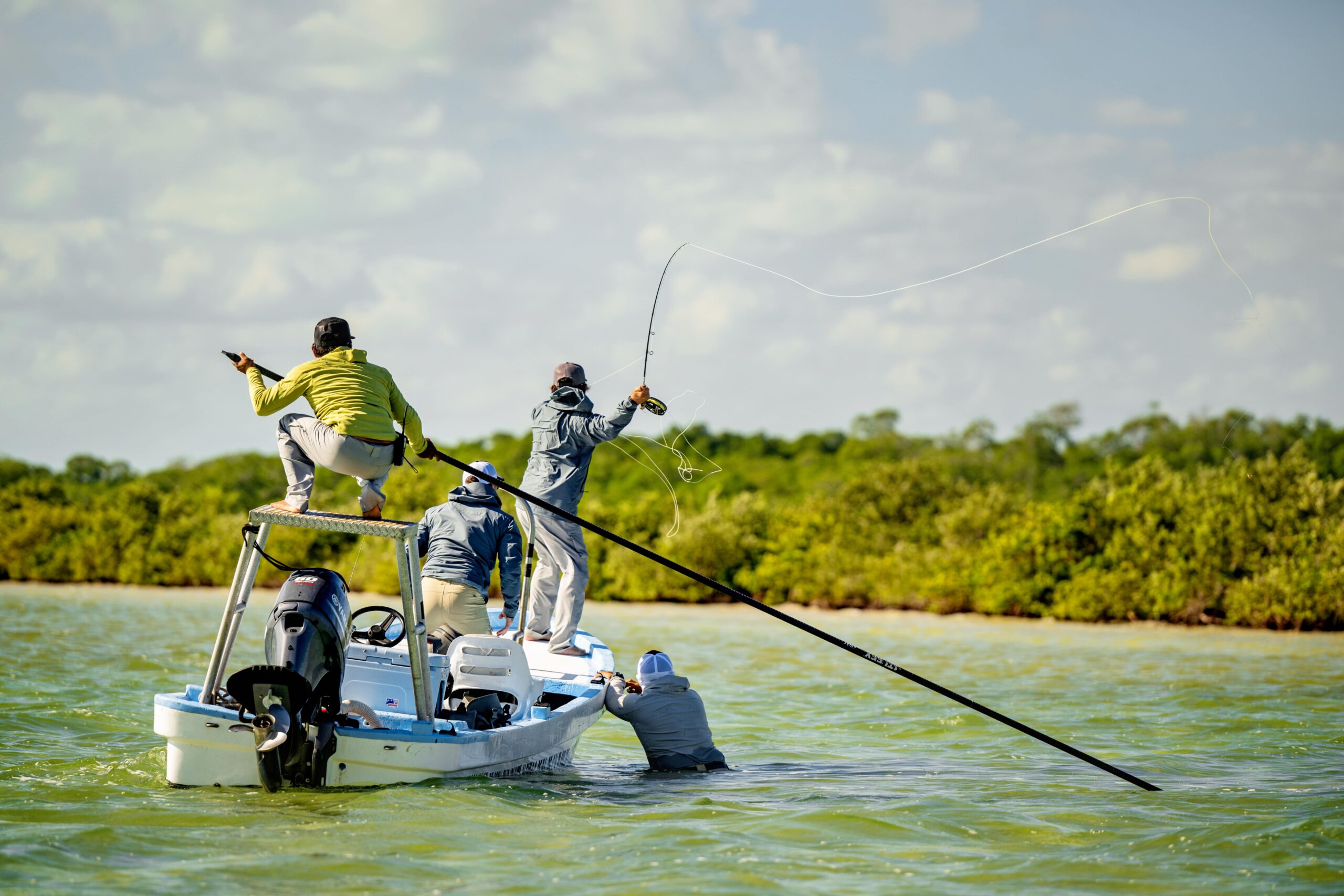
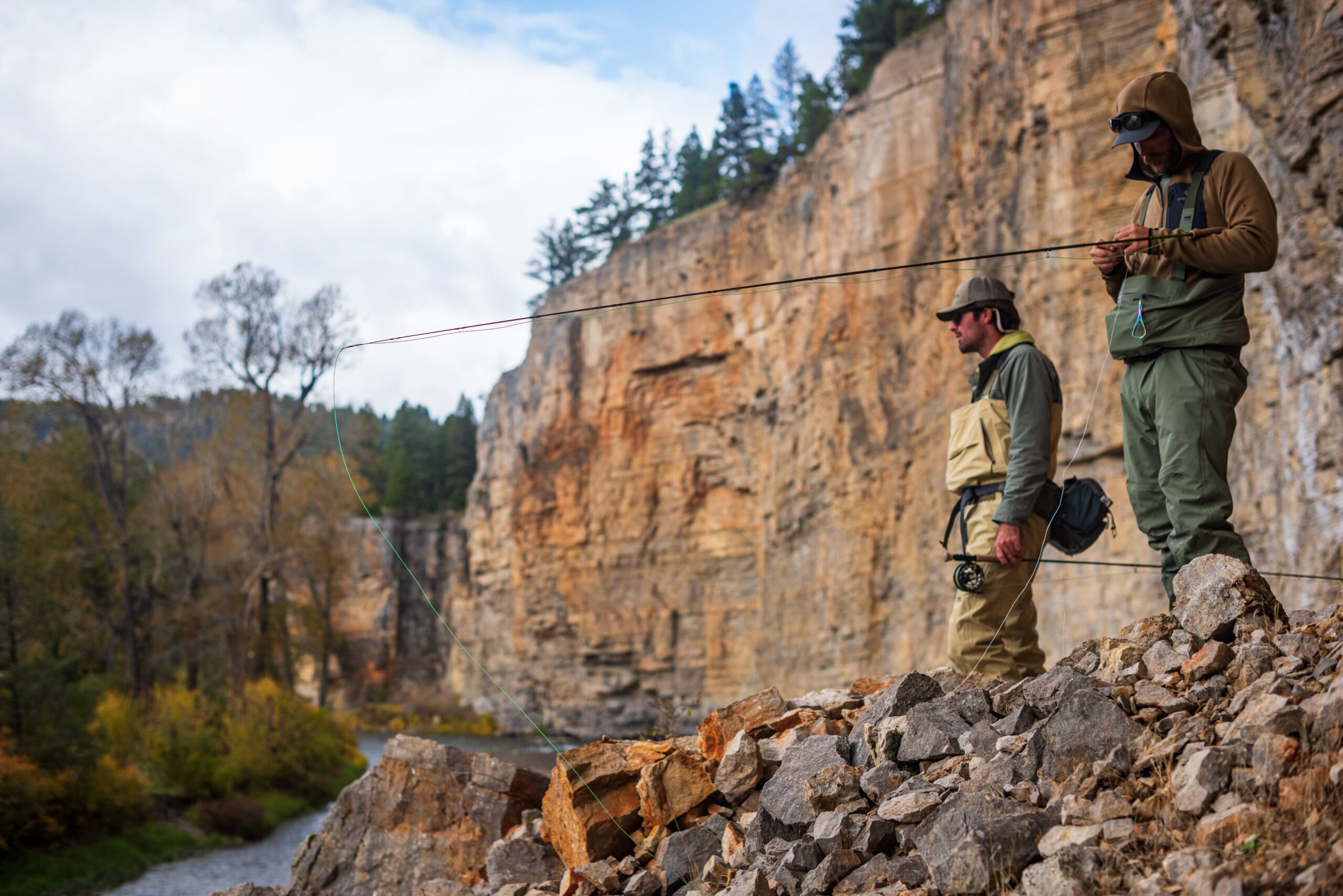
Wading boots have a tough job. One, they need to protect your toes and ankles. Two, they need to give you solid traction and stability in and out of the water. Three, they need to be comfortable even after long days of standing, wading, and hiking on uneven terrain. Four, they need to be durable enough to withstand all the abuse of hiking boots plus countless cycles of soaking and drying. And five, they need to be able to do all these things in temperatures that range from sub-freezing to summer sweltering.
“Wading boots are the perfect challenge for what we do at Skwala,” according to Sloan. “Building a pair of wading boots that excels at support, comfort, durability, and traction is tough.”
Starting this year, Skwala’s launching two different styles of wading boots—the RS and the Carbon—intended to pair with the waders of the same name. “RS is our bomber line,” said Rich Hohne. “Everything in that collection is extremely durable and built to perform in difficult fishing conditions—think hardcore steelheaders or remote fishing in Alaska. Carbon is built to be light and agile, perfect for anglers who like to put in a lot of miles and need gear that can keep up.”
Skwala’s boots blend tried and true wading boot staples (like molded toe caps and bonded seams) with features usually found in hiking boots (like dual-layered ESS rock plates, double lasting, and removable OthoLite insoles). They also bring some new ideas to wading boots, specifically the tread and sole design.
Rethinking Rubber
For years, anglers have had to balance the felt/rubber sole equation. Felt soles are great on slippery rocks but a major liability on other surfaces, especially if you’re scrambling up a bank covered in snow or matted grass. Plus, felt soles are banned in certain fisheries. Rubber gives better traction on variable surfaces and doesn’t retain water but can really suck on slick rocks.
“There’s always been this tradeoff between felt and rubber.” Sloan explained. “We wanted to design a boot that solved this problem, so we developed a completely new outsole pattern called Traction Lug. It’s got unique tri-tiered, stair-step lugs and uses Vibram IDROGRIP rubber. Even without studs, you get excellent traction, but if you add the tungsten cleats, they’re rock solid.”
Over the past few years, Skwala has demonstrated consistent ingenuity and quality, so it seems reasonable for anglers to expect that their boots will outperform other options on the market and offer some unique design features. When Skwala first launched, some seasoned anglers understandably held back, waiting to see if the company, and their waders, would survive the test of time. Three years in, both the brand and the gear seem to be going strong.
Share this post


